Which clear aligner belongs in your mouth? That’s one of the most common questions Dr. Desai hears from kids, teens, and adults who want straighter teeth without a mouth full of metal. Both systems use clear, removable trays. Both can create beautiful smiles. The differences show up in the details, and this guide covers all of them.
What Are Invisalign and Spark Aligners?
Invisalign and Spark are custom clear aligner brands that straighten teeth with a series of removable plastic trays. Invisalign, made by Align Technology, launched in 1998 and uses SmartTrack material. Spark Aligners, from Ormco, launched in 2019 and uses TruGEN polymer. Both need a licensed doctor’s supervision.
That supervision covers every stage, from the first records to the final retainer check, and it’s the part that mail-order kits skip entirely. Neither system is a mail-order or DIY product. That distinction matters more than most people realize. When you order aligners online without an exam, nobody checks your gum health, your root position, or how your bite fits together before the plastic starts pushing teeth around.
At Elm Tree Orthodontics, Dr. Shamik Desai, DMD, MS reviews your scan, your X-rays, and your bite before a single tray gets manufactured. He’s a Harvard School of Dental Medicine graduate who completed his orthodontic residency at Columbia University, and he’s board certified by the American Board of Orthodontics.
Here’s what both brands have in common:
- Custom-made trays produced from a digital scan of your teeth
- A staged 3D plan that maps each tooth movement from start to finish
- Small tooth-colored attachments that help grip and guide certain teeth
- Removable design, so you take them out to eat and brush
- Retainers at the end to hold your new smile in place
The similarities run deep because the underlying science is the same. Gentle, steady force moves teeth through bone, whether that force comes from modern braces or a sequence of clear trays.
How Clear Aligner Treatment Works With Each System
The process looks nearly identical from the patient’s chair. What changes is the plastic, the trim, and the software behind the plan.
Here’s how treatment typically unfolds with either brand:
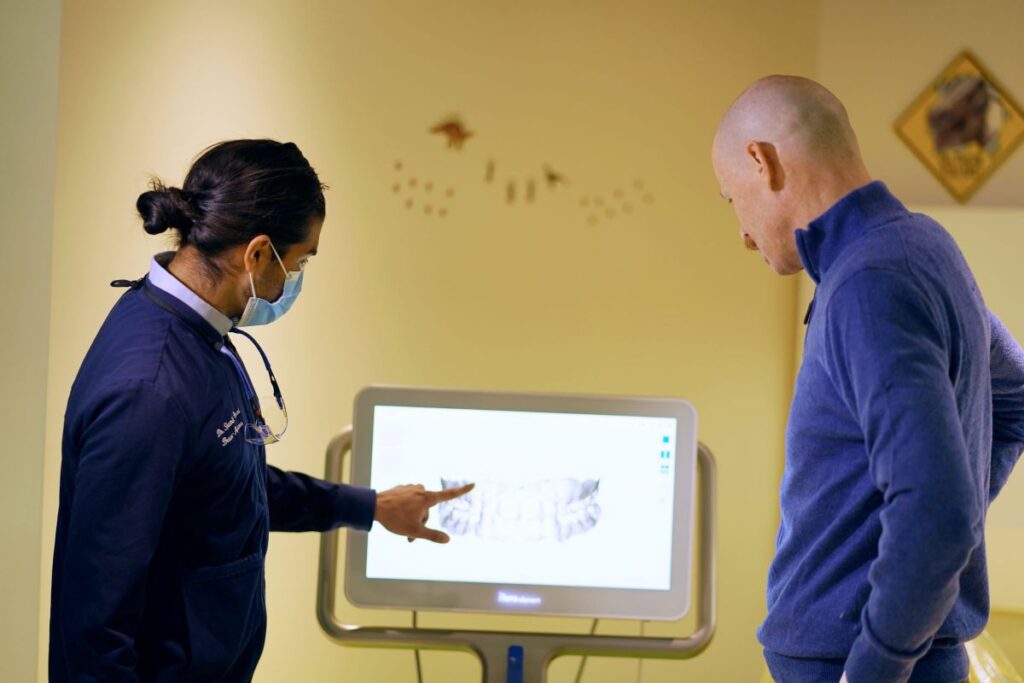
- Digital scan. A handheld scanner captures your teeth in a few minutes. No trays of goopy impression material.
- 3D treatment planning. Dr. Desai maps every movement, tooth by tooth, and decides where attachments belong. You’ll see a preview of your projected result before you commit.
- Attachment placement. Small composite bumps bond to specific teeth. Invisalign calls these SmartForce attachments; Spark uses similarly shaped composite attachments. They give the tray something to push against for rotations and tricky root movements.
- Daily wear. Both systems ask for 20 to 22 hours of wear per day. You’ll swap to a fresh tray roughly every one to two weeks, depending on your individualized treatment plan.
- Progress checks. Visits usually land every six to ten weeks, and some can be handled virtually with photos you take at home.
- Refinements. Near the end, a short round of refinement trays fine-tunes the details. This is normal, not a setback, and it’s built into most plans.
One design difference shows up right away. Spark trays use a polished, scalloped trim line that follows the curve of your gums, while Invisalign trays are trimmed straight along the gum line. Patients often notice that edge against their gum tissue during the first few days.
The plastics behave differently too. Ormco built TruGEN to hold its push steadily across the full wear period instead of fading soon after you snap the tray in, while Align’s SmartTrack was engineered to deliver gentler, steadier pressure than the stiffer materials it replaced. Both descriptions come straight from the manufacturers, and in practice, the quality of your plan and the hours you actually wear the trays matter far more than the polymer itself.
Benefits of Choosing Clear Aligners Over Traditional Braces
Clear aligners give you comfort and flexibility that fixed appliances can’t match. That’s the honest appeal, and it’s why so many adults finally start treatment they put off for years.
What Makes Clear Aligners Easier to Live With?
Day-to-day convenience is the short answer. Trays come out for meals, brushing, photos, and the occasional job interview, which means treatment bends around your schedule instead of the other way around. The advantages patients mention most:
- Nearly invisible. Coworkers, classmates, and cameras rarely notice them. Zoom calls and wedding photos stay exactly the way you want them.
- Removable for meals. No food restrictions. Popcorn, bagels, corn on the cob, all still on the menu.
- Easier hygiene. You brush and floss normally instead of threading around brackets and shape-memory niti wires.
- No bracket emergencies. Nothing pokes, nothing pops off during a soccer game, and nobody needs an unexpected appointment on a Friday afternoon.
- A digital preview. You see the projected outcome before treatment starts, which makes the whole thing feel a lot less like guesswork.
- Fewer, shorter visits. Many aligner appointments take a fraction of the time an adjustment visit does.
None of that changes the biology. Teeth still move at the pace bone allows, and a tray sitting in its case on your kitchen counter does nothing at all. What clear aligners really buy you is a treatment experience that fits into an ordinary week without much fuss.
When Do Braces Still Make More Sense?
Braces still win for some cases, and Dr. Desai will tell you plainly when that’s true. Metal braces and Damon braces handle certain severe rotations, impacted teeth, and large bite corrections with more predictability, since brackets stay bonded around the clock and never depend on whether you remembered to put a tray back in. Plenty of families choose braces after seeing both options laid out, and that’s a good decision when it fits the case. Some patients combine the two, starting with a short round of braces for the hardest movements and finishing the detail work in clear trays.
Comparing the Two Clear Aligner Systems Side by Side
Invisalign and Spark differ mainly in material, trim design, and track record. Invisalign uses SmartTrack plastic with a straight gum-line trim and carries the longest clinical history of any aligner brand. Spark uses TruGEN polymer with polished scalloped edges and markets improved clarity and stain resistance. Both treat mild to complex cases when planned by an experienced orthodontist.
| Feature | Invisalign | Spark Aligners |
|---|---|---|
| Manufacturer | Align Technology | Ormco |
| Launched | 1998 | 2019 |
| Tray material | SmartTrack | TruGEN and TruGEN XR |
| Trim line | Straight along the gum line | Polished, scalloped to follow gum contour |
| Attachments | SmartForce attachments | Composite attachments |
| Marketed strengths | Largest case database, deep research history | Clarity, stain resistance, sustained force |
| Case range | Mild crowding through complex bite correction | Mild crowding through complex bite correction |
| Teen features | Compliance indicators, eruption tabs available | Compliance indicators, eruption tabs available |
| Availability | Offered by most aligner providers | Varies by practice |
How Do the Materials and Clarity Compare?
Ormco built TruGEN with stain resistance as a selling point, and patients who drink coffee or tea often ask about this specifically. Invisalign’s SmartTrack has years of refinement behind it, and Align has revised its formulation more than once since the original aligner plastics of the late 1990s. Realistically, both plastics can pick up color if you sip dark drinks with trays in, which no orthodontist recommends anyway. Clarity also depends on how clean you keep the trays, since a film of plaque dulls any aligner faster than the material itself ever will.

Which Trim Line Feels More Comfortable?
Spark’s scalloped edges hug the gum line and feel smoother to some patients along the tissue. Invisalign’s straight trim gives broader coverage, which can help with certain grip and retention needs, especially on short teeth or teeth with older restorations. Comfort feedback varies person to person, and neither design is universally better. Most patients stop noticing the edge at all within the first week, once the tissue adapts and the novelty wears off.
How Does Force Delivery Differ?
Both companies chased the same goal from different directions, and both landed on a plastic built to avoid the sharp spike-and-fade pattern older aligner materials were known for. Where you’ll actually feel a difference is in the planning: how many stages your case is broken into, how aggressive each individual movement is, and how carefully the attachments are positioned on each tooth. A thoughtfully staged case in either material will outperform a rushed case in the other, every single time.
Which Brand Has the Longer Track Record?
Invisalign has been treating cases since 1998, which gives it a much larger body of published research and clinical experience behind it. Spark is newer, with a growing research base and a manufacturer that has been producing orthodontic products for decades. Elm Tree Orthodontics is both an Invisalign Provider and a Spark Clear Aligners Provider, so Dr. Desai can recommend based on your case instead of based on what’s sitting in the drawer. That’s worth paying attention to when you compare offices, because a practice that carries only one brand will only ever recommend one brand.
What Affects the Cost of Invisalign and Spark Aligners
Invisalign and Spark Aligners typically cost about the same at the same practice. Brand rarely drives the price. Case complexity, treatment length, and the number of trays your plan requires are the biggest factors, followed by refinements and retainers. Insurance orthodontic benefits and FSA or HSA dollars usually apply to either system.
| Cost factor | How it affects your total |
|---|---|
| Case complexity | More movement means more stages and more trays |
| Treatment length | Longer plans require more visits and monitoring |
| Refinements | Most plans include a round; extra rounds may add cost |
| Retainers | Usually bundled, sometimes billed separately |
| Insurance benefit | Orthodontic coverage typically applies to either brand |
| FSA / HSA | Pre-tax dollars can offset a meaningful share |
| Payment structure | Down payment size changes the monthly amount |
A few things worth understanding before you compare quotes:
- Short cases that correct minor front-tooth crowding cost less than full bite corrections, regardless of which brand you pick.
- Published national figures for clear aligner treatment sit in a wide band, which tells you very little about your own mouth.
- Insurance plans often pay a lifetime orthodontic benefit rather than a percentage, so the dollar amount stays the same either way.
- Elm Tree Orthodontics offers easy financing with flexible payment options built around family budgets.
- Booking a free consult gives you a real number for your specific case, not a national average pulled from a website.
Choosing an aligner based on brand price alone almost never makes sense. Choose based on the plan and the doctor behind it.
Which Aligner System Is Right for You?
The right system depends on your teeth, your habits, and your priorities. Dr. Desai looks at all three during your first visit before recommending anything.
You’re likely a strong candidate for either brand if:
- Your teeth and gums are healthy and free of untreated decay or gum disease
- You’ll commit to wearing trays 20 or more hours a day
- Your case involves crowding, spacing, or a bite issue that aligners can correct predictably
- You can keep track of small removable objects (be honest with yourself here)
Spark may be the better match when:
- Clarity and stain resistance rank high on your list
- The scalloped trim feels more comfortable against your gums
- You want a newer plastic engineered for steady force between changes
Invisalign may be the better match when:
- Your case is complex and benefits from the deepest treatment database in the field
- Your plan calls for specific SmartForce attachment designs
- Continuity matters because you’ve had Invisalign before
Teens deserve a closer look.
Both brands offer compliance indicators that fade with wear, plus eruption features that leave room for teeth still coming in. Wear time predicts success more than brand does, and blue dots on a tray tell a parent a lot.
Some bites need more than plastic. Severe skeletal discrepancies, significantly impacted teeth, or large jaw growth differences may call for braces, a combination approach, or growth-guiding appliances. Dr. Desai’s exam, records, and digital scan settle the question, and he’ll walk you through the reasoning either way.
Photos and comparison charts only take you so far. A digital scan, a real exam, and a look at your own 3D plan answer the question far better than any article can. Dr. Shamik Desai, DMD, MS is a board-certified orthodontist and a member of the American Association of Orthodontists and the American Dental Association, and he offers both Invisalign and Spark so the recommendation fits your teeth rather than the inventory. Our offices see kids, teens, and adults, and everybody’s welcome. From the moment you contact our office to your final retainer check, we want you to be completely satisfied. If you’d like to see your own options side by side, a free consult is an unhurried place to start, and it’s often where patients first picture what it will feel like to show the world your smile.

Frequently Asked Questions About Invisalign and Spark Aligners
Are Spark Aligners as effective as Invisalign?
Yes, for most cases. Both systems move teeth using the same biological principles, and both handle everything from mild crowding to complex bite correction when planned properly. Invisalign has a longer clinical history simply because it launched two decades earlier. The doctor planning your case and your daily wear time influence your result far more than the brand on the box.
Which aligner is more comfortable to wear?
Comfort feedback splits fairly evenly. Spark’s polished, scalloped trim line follows your gum contour and feels smoother to some patients along the tissue. Invisalign’s straight trim covers slightly more surface, which certain patients prefer for grip. Both cause mild tightness for a day or two after each tray change, which is exactly what you want since that pressure means teeth are moving.
Do Spark Aligners stain less than Invisalign?
Ormco markets TruGEN material for improved clarity and stain resistance compared to other aligner plastics. Real-world results depend heavily on habits. Coffee, tea, red wine, and curry can discolor any aligner if you keep trays in while consuming them. Remove your trays for everything except water, rinse before reinserting, and either brand will stay clear.
How long does treatment take with each system?
Most clear aligner cases run 12 to 24 months, and neither brand is inherently faster. Short cosmetic cases can finish in a few months. Complex bite corrections take longer. Your wear time is the biggest variable, since trays only work while they’re in your mouth. Dr. Desai gives you a realistic estimated timeline at your free consult.
Can teens use Spark Aligners?
Absolutely. Spark offers teen-specific features including compliance indicators that fade as trays are worn and eruption tabs that leave space for permanent teeth still coming in. Invisalign offers comparable teen features. Both work well for motivated teenagers, and rather than feeling self-conscious about brackets, they get to show that smile every day of treatment.
Do both require attachments and retainers?
Most cases with either brand use small tooth-colored attachments bonded to certain teeth, since they give the trays something to grip for rotations and root movements. They come off cleanly when treatment ends. Retainers are required with both systems, and with braces too. Teeth naturally drift throughout life, so retention protects the result you worked for.