
Wondering how long clear aligner treatment takes? For most people, Invisalign and Spark treatment timelines run between 6 and 24 months, with the typical case landing around 12 to 18 months. The exact answer depends on how complex your bite is, how consistently you wear your trays, and which system fits your smile goals.
At Elm Tree Orthodontics, Dr. Desai works with both Invisalign and Spark for kids, teens, and adults across Hamden and North Haven. This guide breaks down the phases, the differences between the two systems, and what influences your personal timeline, so you can walk into your free consult with real clarity.
What Is Clear Aligner Treatment?
Clear aligner treatment uses a series of custom, removable trays to gradually shift your teeth into their ideal positions. Invisalign and Spark are two of the leading FDA-cleared aligner systems, and both work by applying gentle, controlled pressure as you progress through each tray. Most treatments take 6 to 24 months, depending on complexity.
Here’s the quick overview:
- Custom-fit trays: Each set is made from 3D scans of your teeth, so the fit is precise.
- Nearly invisible: The trays are thin and clear, which is why teens and adults tend to pick them.
- Removable: You take them out to eat, drink anything but water, and brush and floss.
- Daily wear: You’ll wear them 20 to 22 hours a day and switch to the next tray every 1 to 2 weeks.
- Wide range of cases: Modern aligners can treat mild to moderate issues, plus many complex ones that once required metal braces.
At Elm Tree Orthodontics, Dr. Desai offers both Invisalign and Spark so your individualized treatment plan matches your bite, lifestyle, and timeline, not the other way around.
How Clear Aligner Treatment Works: The 4 Phases
Clear aligner treatment moves through four main phases: consultation, planning, active treatment, and retention. Some cases also include an optional refinement step to fine-tune the final result. Each step keeps your smile on track and your experience smooth.
Phase 1: Free Consultation and Digital Scan
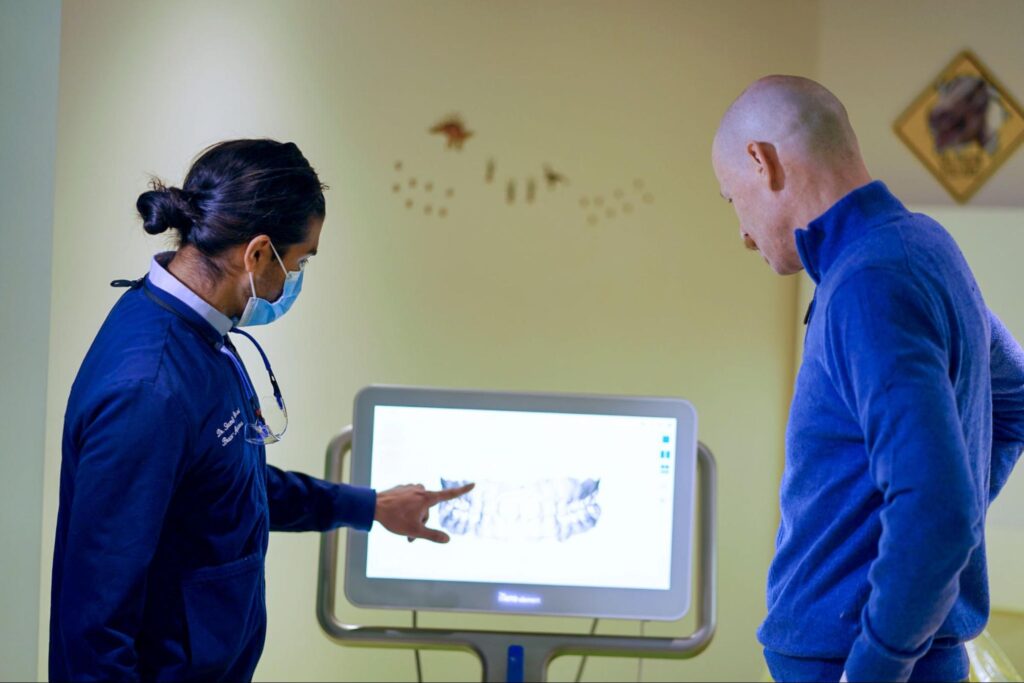
Your first visit at Elm Tree Orthodontics starts with a free consult. Dr. Desai reviews your smile goals, takes digital scans and X-rays, and walks you through whether Invisalign, Spark, or another option fits best. You’ll see a preview of what your treatment could look like.
Phase 2: Planning and Aligner Fabrication
Once you’re ready to get started, Dr. Desai designs your individualized treatment plan down to each tooth movement. Your custom trays are then fabricated, typically arriving in about 2 to 4 weeks.
Phase 3: Active Treatment
This is the stretch where the real work happens. You’ll:
- Wear each tray for 1 to 2 weeks before switching to the next.
- Keep them in 20 to 22 hours daily, taking them out only for meals, drinks, and brushing.
- Visit the Hamden or North Haven office for check-ins every 8 to 12 weeks.
- Use attachments (small tooth-colored shapes) or elastics if Dr. Desai needs to guide specific movements.
Optional Step: Refinement (If Needed)
Teeth don’t always track exactly as planned. If a few teeth need extra nudging at the end, Dr. Desai orders a short set of refinement aligners. This is normal and part of getting the finish right.
Phase 4: Retention
Once your teeth are in place, retainers protect your results long-term. Most patients wear them nightly, indefinitely, to keep that beautiful smile locked in.
Benefits of Choosing Clear Aligners for a Faster, Discreet Smile
Clear aligners have become a go-to option because they fit modern life. They’re subtle, they’re removable, and they often require fewer visits than traditional braces. For teens and adults who want straight teeth without broadcasting the process, aligners check a lot of boxes.
Here’s what patients at Elm Tree Orthodontics mention most:
- Nearly invisible appearance. Invisalign and Spark trays are clear and smooth, so most people won’t notice you’re in treatment. That matters for professionals, college students, and self-conscious teens.
- Removable for meals and hygiene. You can eat anything you want, and brushing and flossing stay simple. That often means better oral health throughout treatment compared to brackets and wires.
- Fewer in-office visits. Check-ins typically run every 8 to 12 weeks instead of monthly. That’s less time off work or away from school.
- More comfortable than brackets. No sharp edges, no poking wires. The trays apply steady, gentle pressure that most patients adjust to within a few days.
- Predictable, previewable results. Digital treatment planning lets you see a 3D simulation of your final smile before you start. You know what you’re working toward.
- Built around compliance. The regular tray-change schedule gives you clear mile markers. When you stick to the plan, treatment stays on schedule.
One more benefit worth mentioning: because aligners are removable, special occasions get easier. Weddings, prom photos, and big presentations are simpler because you can take the trays out briefly, enjoy the moment, and pop them right back in.
Invisalign vs. Spark: Timeline and Feature Comparison
Both Invisalign and Spark deliver excellent results, and their timelines are more similar than different. The bigger factor is your specific case, not the brand. That said, there are real differences in materials and track record worth knowing before you choose.
Here’s how they compare side by side:
| Feature | Invisalign | Spark |
|---|---|---|
| Typical treatment time | 12 to 18 months (6 months for simple cases, up to 24 or more for complex) | 12 to 18 months (similar range based on complexity) |
| Tray change frequency | Every 1 to 2 weeks | Every 1 to 2 weeks |
| Daily wear required | 20 to 22 hours | 20 to 22 hours |
| Material | SmartTrack | TruGEN, designed for clarity and stain resistance |
| Appearance | Clear, slightly more visible over time | Reported to stay clearer and resist staining longer |
| Case library | Largest in the industry, decades of data | Newer system with growing adoption |
| Attachments | Yes, when needed | Yes, often smaller profile |
A few takeaways:
- Timelines are comparable. Treatment length is driven more by case complexity than brand choice. If someone promises you a specific month count based on brand alone, pump the brakes.
- Spark’s TruGEN material is often praised for staying clearer and resisting stains from coffee, tea, and food.
- Invisalign has the largest case library, which helps with very complex movements where decades of data inform the plan.
At Elm Tree Orthodontics, Dr. Desai is a board-certified orthodontist who treats patients with both systems. During your free consult, he’ll recommend the aligner that fits your bite, lifestyle, and goals, not the one with the biggest marketing budget.
Factors That Affect Clear Aligner Treatment Length
Several variables shape how long your clear aligner treatment runs. Some you can control, some you can’t. Understanding them upfront helps you plan.
- Case complexity. Mild crowding or small gaps often finish in under a year. Overbites, underbites, crossbites, and significant rotations take longer and may need more trays.
- Patient compliance. This is the biggest variable, by far. Wearing your aligners 20 to 22 hours a day keeps teeth tracking on schedule. Skipping hours stretches treatment out.
- Number of aligner trays. More complex movements need more trays, which typically increases treatment time.
- Refinements or mid-course corrections. If a few teeth don’t track perfectly, Dr. Desai may add refinement aligners. It’s common and doesn’t mean anything went wrong.
- Age and bone response. Teens often respond quickly because their jaws are still developing. Adult bone remodels more slowly, which can add a few months.
- Oral health. Active decay or gum disease needs to be addressed before or during treatment, which can affect the schedule.
Elm Tree Orthodontics offers easy financing with flexible payment options, so you can get started when you’re ready.
Who Is a Good Candidate for Invisalign or Spark?
Clear aligners work well for a wide range of patients, but they’re not the right fit for every case. Here’s a quick candidacy checklist:
- Teens and adults with mild to moderate crowding, spacing, or bite issues
- Patients committed to the daily wear schedule of 20 to 22 hours
- Healthy teeth and gums with no active decay or periodontal disease
- Complex bite cases may still qualify but often need attachments, elastics, or a hybrid approach with braces
- Younger kids are often better suited for the 7 & Up Club monitoring program, metal braces, or interceptive care
- A free consult is the best way to know for sure, with digital scans mapping out exactly what’s possible
Elm Tree Orthodontics welcomes kids, teens, and adults, and everybody’s welcome at both the Hamden and North Haven offices. If aligners aren’t the best fit, Dr. Desai will walk you through other options, including metal braces and Damon braces, so you leave with a clear next step.

Frequently Asked Questions About Clear Aligner Timelines
How long does it take to fix crowded teeth with Invisalign?
Mild to moderate crowding typically takes 6 to 18 months with Invisalign. Minor crowding may finish in as little as 6 months, while more significant crowding, especially with rotated teeth, often runs 12 to 18 months. Your exact timeline depends on how much movement is needed and how consistently you wear your trays.
How long before I see Invisalign or Spark results?
Most patients notice visible changes within 4 to 6 months of starting treatment. Small shifts begin within the first few weeks, but it takes a few months for friends and family to spot the difference. The 3D treatment preview Dr. Desai shows you at your first visit helps you track progress against the plan.
What is the 30-minute rule for Invisalign?
The 30-minute rule means you should limit the total time your aligners are out of your mouth to about 2 hours per day, and each individual break (like a meal) should stay under 30 to 45 minutes when possible. The more time trays are in, the better teeth track on schedule.
Is Spark faster than Invisalign?
Not necessarily. Spark and Invisalign have comparable timelines, and treatment length depends far more on case complexity and patient compliance than brand. Some patients prefer Spark for its clearer, stain-resistant TruGEN material, while others go with Invisalign for its larger case library. Dr. Desai will help you choose the right system during your free consult.
How long do I wear retainers after treatment?
Retainers are a lifelong commitment, but a very easy one. Most patients wear them nightly, indefinitely, to keep teeth from shifting back. Teeth naturally want to move throughout life, so retainers are what protect the beautiful smile you worked for.
Can clear aligner treatment be accelerated?
In many cases, yes. Strict compliance with wearing your aligners 20 to 22 hours a day is the most reliable way to stay on or ahead of schedule. Some patients also qualify for accelerated options Dr. Desai can discuss at your consult. Switching trays faster than prescribed is not safe, so always follow the plan Dr. Desai sets.
Ready to find out how long your clear aligner treatment would take? Book a free consult at Elm Tree Orthodontics today. Dr. Desai and his team see patients at the Hamden Office at 2989 Dixwell Avenue (203-281-1022) and the North Haven Office at 12 Washington Avenue (203-285-6114). We’d love to help you show the world your smile.