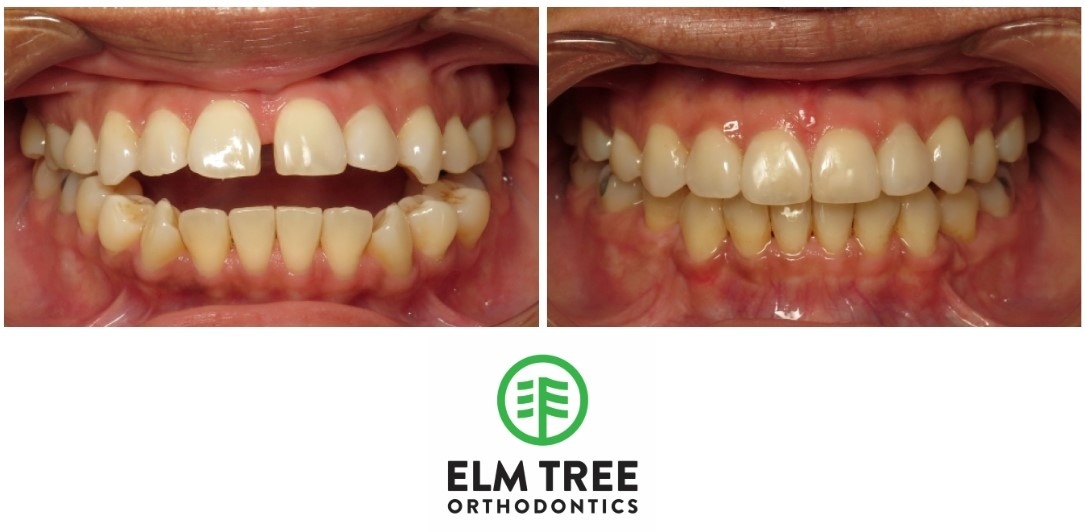
An open bite happens when your upper and lower teeth don’t touch when you close your mouth, leaving a visible gap. Orthodontic treatment fixes open bites by using controlled forces to move teeth vertically into proper alignment. Depending on severity, Dr. Desai may recommend braces with elastics, clear aligners, or temporary anchorage devices to guide teeth into their correct positions and restore full function to your bite. Families across Hamden and North Haven see this condition often, and the good news is that it’s highly treatable at any age.
If you or your child has an open bite, you’re probably wondering what causes it and how treatment actually works. Let’s break down what you need to know about open bite correction.
What Is an Open Bite?
An open bite is a type of malocclusion where a gap remains between your upper and lower teeth even when your jaw is fully closed. This gap can appear in the front of your mouth (anterior open bite) or between your back teeth (posterior open bite). Anterior open bites are more common and often more noticeable.
Several factors can cause an open bite to develop:
- Prolonged thumb sucking or pacifier use during childhood
- Tongue thrusting (pushing the tongue against or between the teeth when swallowing)
- Skeletal growth patterns where the jaw develops vertically rather than horizontally
- Genetics that influence jaw shape and tooth position
Open bites aren’t just a cosmetic concern. When your front teeth don’t meet, you may struggle to bite into foods like sandwiches or apples. Many people with open bites develop speech difficulties, particularly with “s” and “z” sounds. Your back teeth also take on extra work, which can lead to excessive wear, sensitivity, and jaw discomfort over time.
How Orthodontics Corrects an Open Bite
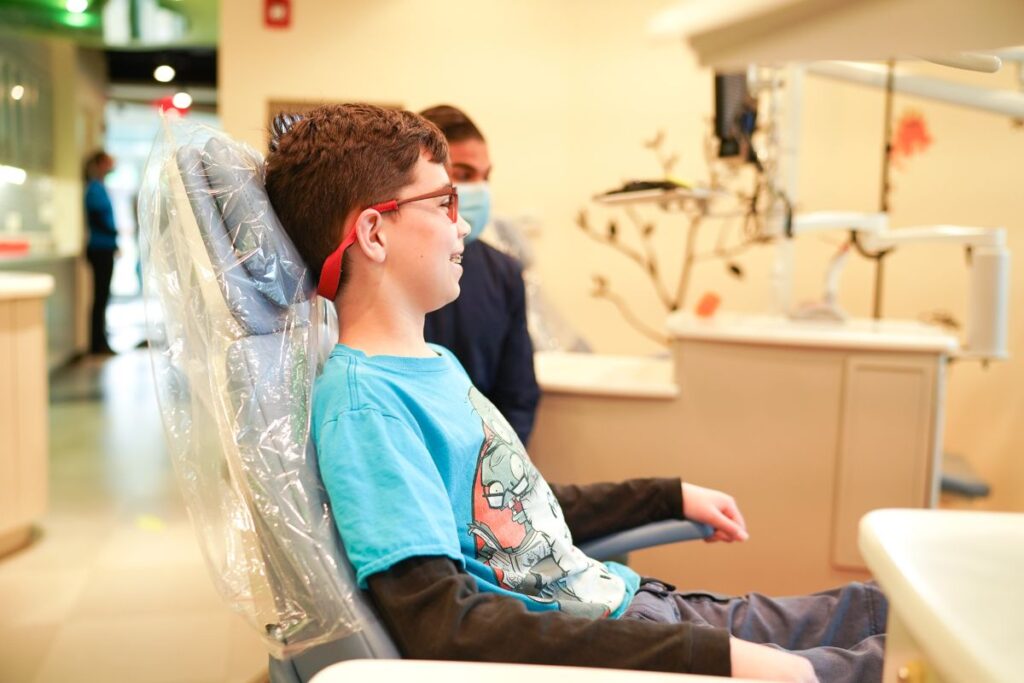
Orthodontists correct open bites using four main approaches: braces with elastics, clear aligners, temporary anchorage devices (TADs), and habit correction therapy. The right combination depends on the severity of the bite, whether the cause is dental or skeletal, and the patient’s age. Moving teeth vertically is one of the trickier movements in orthodontics, but modern tools make it predictable.
Metal braces with elastics remain the gold standard for moderate to severe open bites. Rubber bands connect hooks on your upper and lower braces, creating vertical forces that pull teeth together. Dr. Desai customizes elastic wear patterns based on your specific bite, adjusting them throughout treatment as your teeth respond.
Clear aligners work well for mild to moderate open bites. They’re particularly effective at intruding (pushing down) back teeth, which allows front teeth to come together naturally. Today’s aligner systems use precise attachments and staged tooth movements that handle many bite corrections once thought to require fixed appliances only.
Temporary anchorage devices (TADs) are small titanium screws placed in the bone to provide stable anchor points. They allow Dr. Desai to move specific teeth without affecting others, giving precise control over vertical tooth movement. TADs are especially helpful for adult patients whose bones are no longer growing.
Habit correction is often key to lasting results. If tongue thrusting or other oral habits caused your open bite, you may need myofunctional therapy alongside orthodontic treatment. Without addressing the underlying habit, teeth can shift back after braces come off.
Severe skeletal open bites in adults sometimes call for a coordinated approach with an oral surgeon. This involves repositioning the jaw bones, followed by braces or aligners to fine-tune tooth positions afterward. Dr. Desai works closely with trusted oral surgeons in the area when this kind of intervention offers the best outcome for your specific case.
Benefits of Treating an Open Bite
Correcting an open bite does more than improve how your smile looks. Here are the key gains patients notice after open bite treatment:
How Does Open Bite Treatment Improve Chewing and Speech?
When all your teeth meet properly, biting and chewing finally work the way they should. You’ll be able to take a clean bite from a sandwich, a slice of pizza, or an apple without using your back teeth to compensate. Speech often improves too. Many patients notice quick gains in pronunciation, especially with sounds that require tongue-to-tooth contact like “s,” “z,” “t,” and “th.” For kids still developing speech patterns, this can be a real turning point.
What Long-Term Health Benefits Come From Open Bite Correction?
A balanced bite protects your teeth and jaw joints for the long haul. Here’s what closing the gap delivers:
- Reduced tooth wear because all teeth share the workload evenly instead of overloading the back ones
- Lower risk of TMJ problems, since a balanced bite puts less strain on your jaw joints and muscles
- Easier brushing and flossing thanks to properly aligned teeth, which lowers your risk of cavities and gum disease
- A boost in confidence that comes from a smile that both works well and looks great
Braces vs. Clear Aligners for Open Bite Correction
| Factor | Metal Braces | Clear Aligners |
|---|---|---|
| Best for | Moderate to severe open bites | Mild to moderate open bites |
| Vertical control | Excellent with elastics and TADs | Good for posterior intrusion |
| Visibility | Visible metal brackets and shape-memory niti wires | Nearly invisible when worn |
| Compliance needed | Always working (fixed appliance) | Requires 22+ hours daily wear |
| Typical treatment time | 18-30 months for open bite cases | 12-24 months with good compliance |
| Auxiliary options | TADs, elastics, springs, bite turbos | Attachments, elastics (limited) |
For most open bite cases, Dr. Desai can get excellent results with either option. The best choice depends on your specific bite, lifestyle preferences, and how consistently you’ll wear removable aligners.
Metal braces shine when precision matters. They’re attached to your teeth 24/7, so treatment progresses steadily without relying on patient compliance. Elastics can be customized and adjusted at each visit for maximum control.
Clear aligners like Spark offer discretion and comfort. They’re particularly effective when the treatment plan involves intruding back teeth. However, they require discipline. If you’re not wearing them at least 22 hours daily, your open bite won’t close as planned.
What Affects the Cost of Open Bite Treatment?
Open bite treatment costs typically depend on six key factors, and the overall cost varies widely based on case complexity and treatment method. Most patients receive a complete cost breakdown during their first visit, with options to match different budgets.
- Severity of your open bite, larger gaps and skeletal involvement require longer, more complex treatment
- Treatment method, clear aligners and braces have different price points, and combination approaches may affect cost
- Auxiliary appliances needed, TADs, habit appliances, and other tools add to the overall cost
- Treatment duration, more appointments over a longer period increases total cost
- Coordinated care with specialists, if your case calls for working alongside an oral surgeon, those services are billed separately
- Your insurance coverage, many plans cover a portion of orthodontic treatment
Most orthodontic offices accept a wide range of insurance plans and offer financing with flexible payment options to fit a family’s budget. A free consult typically includes a clear breakdown of costs and payment options before treatment begins, so families can make confident decisions without surprise fees once an individualized treatment plan starts.
How to Know if You Need Treatment for an Open Bite
Not sure if you or your child has an open bite? Look for these signs:
- Visible gap between upper and lower front teeth when biting down naturally
- Difficulty biting into foods like sandwiches, pizza, or apples
- Speech issues including lisping or trouble with certain sounds
- Tongue visibility between your teeth at rest or when swallowing
- Worn back teeth from compensating for front teeth that don’t meet
- Jaw fatigue or discomfort from an unbalanced bite
The American Association of Orthodontists recommends children have their first orthodontic evaluation by age 7. At this age, Dr. Desai can spot developing open bites early, when treatment is often simpler. Early monitoring lets orthodontists track jaw growth and tooth eruption, then step in at the ideal time if a problem is forming. This is especially helpful for kids whose habits or growth patterns put them at higher risk.
Adults can absolutely fix open bites too. At Elm Tree Orthodontics, Dr. Desai, a Harvard School of Dental Medicine graduate who completed his orthodontic residency at Columbia University, treats open bites in kids, teens, and adults across Hamden and North Haven using the approach that fits each patient’s unique situation.
Frequently Asked Questions About Open Bite Treatment
How long does it take to fix an open bite with braces?
Most open bite cases take 18 to 30 months to correct with braces. The timeline depends on how severe your open bite is and whether you need additional appliances like TADs or elastics. Wearing your elastics as directed is crucial. Skipping them can add months to your treatment.
Can clear aligners like Spark fix an open bite?
Yes, clear aligners can effectively treat mild to moderate open bites. They work especially well when the treatment involves intruding back teeth. Severe open bites or those requiring significant vertical movement may respond better to braces. Dr. Desai will recommend the best option during your evaluation at Elm Tree Orthodontics.
Will an open bite come back after treatment?
Relapse is possible if the underlying cause isn’t addressed. If tongue thrusting or other habits caused your open bite, you may need myofunctional therapy to retrain your tongue. Wearing your retainer as directed is also critical. Most patients wear retainers full-time initially, then transition to nighttime wear long-term.
Can an open bite fix itself without orthodontics?
Rarely. Some mild open bites in young children may improve if habits like thumb sucking stop early enough. Most open bites, though, don’t self-correct and tend to get worse without treatment. Early evaluation gives you the best chance to catch issues when they’re easier to fix.
Is open bite treatment uncomfortable?
You’ll feel some soreness after adjustments, especially in the first few days. Most patients describe it as pressure rather than anything sharp. Over-the-counter relief medications and soft foods help during adjustment periods. The discomfort is temporary and manageable, and it tends to fade quickly as your mouth adapts to each new stage of treatment.
What happens if an open bite is left untreated?
Untreated open bites can lead to progressive tooth wear, TMJ trouble, speech difficulties, and digestive issues from inadequate chewing. The condition typically doesn’t improve on its own and may worsen over time. Treatment becomes more complex in adulthood when growth is complete, which is why Dr. Desai encourages early evaluation for catching things sooner.
Ready to close the gap? At Elm Tree Orthodontics, Dr. Desai creates individualized treatment plans for open bites in kids, teens, and adults. With a long history of caring for local families, we’ve helped many patients achieve healthy, functional bites. Reach out for a free consult to learn which treatment option might be right for you.